Soffit and Fascia Repair in Farmington, Connecticut
Soffit and Fascia Repair in Farmington, Connecticut protects the roof edge, attic, and exterior from water, pests, and decay. At Farmington Siding and Windows Pro, we repair loose, cracked, or rotted soffit and fascia for homeowners facing leaks, peeling paint, or storm damage. Our team checks the visible damage, traces how water is entering, and explains the repair before work begins. Get the roofline closed up before the next stretch of wet or freezing weather.
Soffit and fascia repair covers inspection, removal of damaged sections, replacement of affected material, and checks of the adjoining roof-edge connections. We also look for the water source and inspect exposed backing when the repair requires opening the assembly. Work beyond the affected area, such as broad siding replacement or unrelated roof repairs, is discussed separately so you know what the repair addresses.
Roof-Edge Inspection
We examine fascia, soffit, gutter attachment, and nearby siding for rot, openings, staining, loose fasteners, and signs of water travel. Measurements help establish the length and profile of the affected section before material is removed.
Damaged Material Removal
We take out unsound panels or boards and inspect the exposed surface for additional deterioration. Removing failed material rather than covering it gives replacement pieces a firmer base and reveals whether moisture has reached the backing.
Compatible Replacement
We fit replacement soffit or fascia to the existing assembly, with attention to profile, fastening, and adjoining siding. If the area uses vinyl or wood, the installation method is selected to suit that material and its movement.
Flashing and Joint Checks
We inspect the roof-edge transition and use flashing or caulk where the assembly requires it. Proper overlap and drainage come first; sealant is not used to hide a gap that needs a correctly fitted component.
Cleanup and Walkthrough
We clear removed material and debris from the work area, then review the repair with you. You can see the completed edge, hear what was corrected, and learn which nearby details to watch after the next rainfall.
Homes and businesses.
The approach is the same for a home and a business. What changes is the access, the schedule and who needs the paperwork.
Homes and Rentals
We check roof edges for leaks, loose panels, and gutter strain around homes and rental properties. You see the affected area and the repair steps before work proceeds.
Water marks beneath upstairs eaves
Loose soffit after wind
Soft fascia beneath gutters
Business Properties
We inspect roofline damage around storefronts and managed buildings, including access and pedestrian areas. Property managers receive a clear review of affected sections and repair progress.
Damaged canopy edges
Loose panels above entrances
Gutter strain on long elevations
Soffit and Fascia Repair in Farmington
A plain-language look at what Soffit and Fascia Repair involves and when it is needed.
Soffit and Fascia Repair in Farmington, Connecticut is exterior carpentry that restores the boards and panels beneath roof overhangs and along roof edges when water, rot, or impact leaves them open or unstable. Fascia supports the lower roof edge and often carries the gutter; soffit closes the underside of the eave and helps protect the attic. We remove damaged sections, inspect the substrate, replace compromised material, and seal joints with suitable flashing and caulk. The repair is complete only after we check the transition to siding and gutters for openings that could invite more water.
Farmington homes face freeze-thaw cycles, wind-driven rain, falling branches, and ice buildup that can loosen trim or push water behind the roof edge. Older wood siding and newer vinyl siding each need compatible flashing and fastening, so our crew identifies the assembly before opening it. For soffit and fascia fixing Farmington homeowners call us after noticing a sagging gutter, staining beneath an eave, or scratching in the attic. Affordable Soffit and Fascia Repair in Farmington Connecticut starts with correcting the leak source, not simply covering a damaged board.
A sound roof edge sheds water outward and closes openings beneath the eaves.
What it is
Repair of damaged soffit, fascia, and related roof-edge connections.
When needed
Use it for rot, loose panels, stains, gaps, or failing gutter support.
What to expect
Inspection, selective removal, compatible replacement, and a finished-edge check.
What to Expect During the Repair
Soffit and fascia repair in Farmington follows a clear sequence: locate the entry point, expose only what needs inspection, rebuild the roof edge, and verify the finished connection. We explain each stage and keep your access, landscaping, and daily routine in mind.
Inspect the Eaves
On the first visit, we walk the exterior with you and inspect the roof edge, gutter line, soffit, and nearby siding. A ladder or scaffolding gives us a safe view of high or steep areas, while a tape measure records affected lengths. We look for soft wood, open seams, staining, loose panels, and signs of water infiltration before recommending a repair.
Walk-around
Measure
Inspect
Trace the Water
We check whether the damage begins at a roof edge, gutter joint, flashing transition, or exposed fastener. Water can travel behind fascia before appearing as a stain indoors, so we compare multiple points rather than patching the first visible defect. You get a plain explanation of what is failing and which sections need opening.
Trace water
Check flashing
Explain findings
Prepare the Work Area
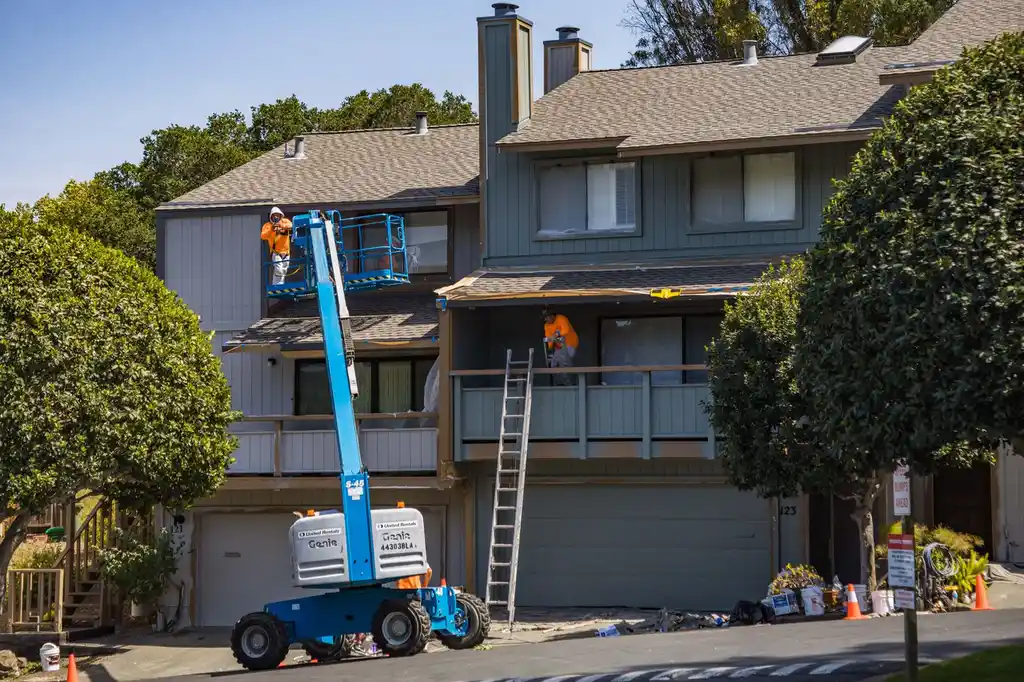
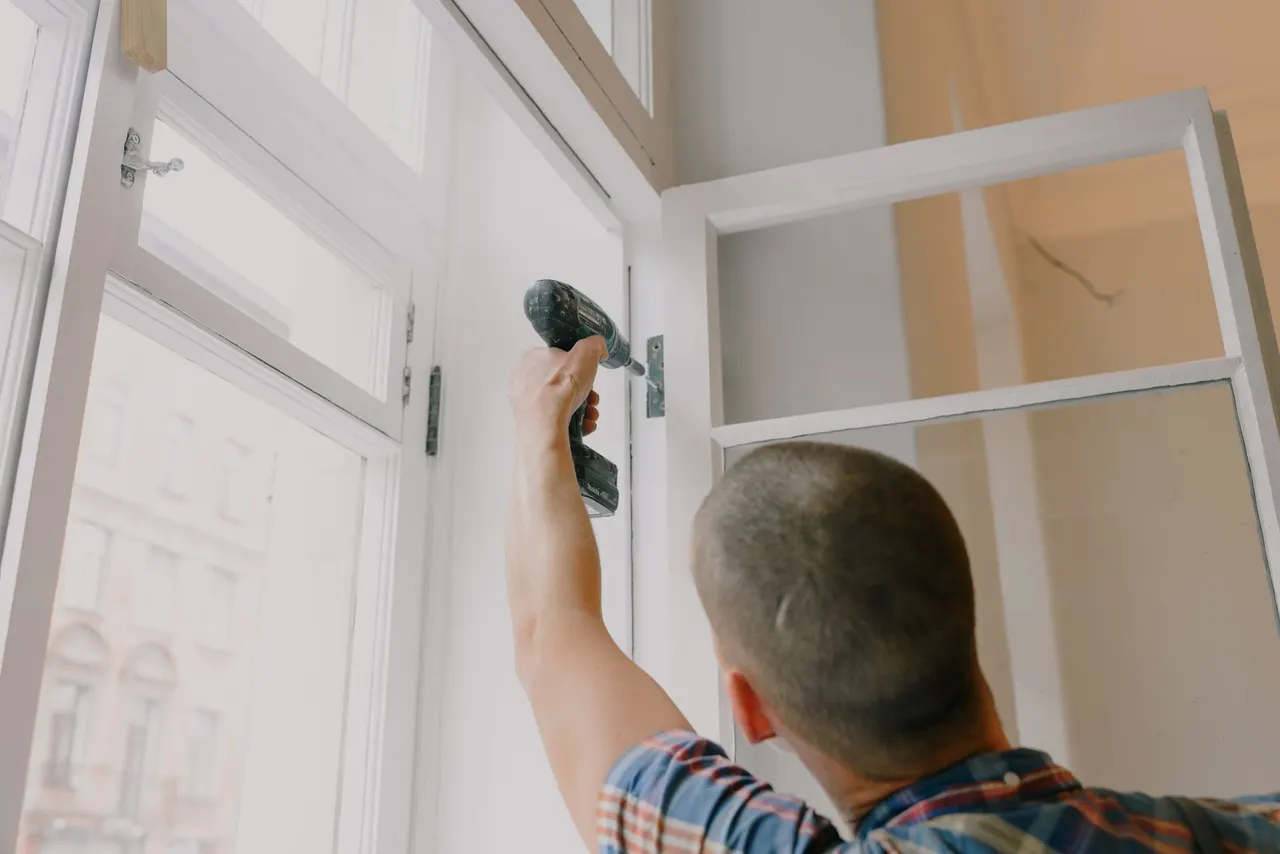
Before removal, we protect the area below the eave and set up a stable ladder or scaffolding for the height and ground conditions. We use a utility knife and window pry bar where needed to release adjoining trim without tearing sound siding. This preparation keeps the work controlled and limits disturbance to your exterior.
Protect area
Set access
Prepare
Replace Damaged Sections
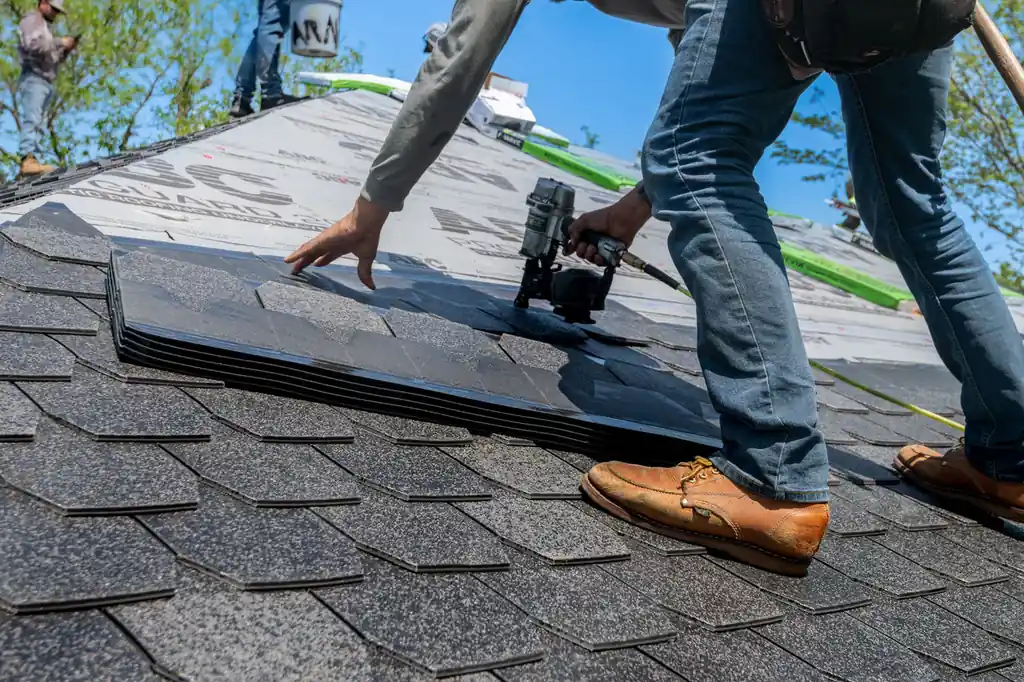
We remove unsound material, check the exposed backing, and replace damaged soffit or fascia with a compatible section. A circular saw makes clean cuts; a nail gun or siding nailer fastens components securely. We fit flashing at vulnerable transitions and apply caulk where the assembly calls for a sealed joint, not as a substitute for proper overlap.
Remove rot
Fit material
Seal joints
Check the Finished Edge
After installation, we check alignment, fastening, panel fit, and the gutter connection. We clear debris and review the completed repair with you, including any remaining concerns found behind the opened section. Most localized repairs take about two to six hours; extensive rot or hard access can extend the job into a second day.
Check alignment
Clear debris
Review work
Tools and Repair Methods
Move across a circle, or focus it and press Enter, for an illustrative thermal view of the photograph.
Tape Measure and Level
We measure damaged runs and check that replacement fascia and soffit align with the existing edge before fastening.
Circular Saw
We use controlled cuts to remove failed boards and prepare replacement pieces while limiting disturbance to sound material.
Siding Nailer
A siding nailer fastens compatible exterior panels while helping preserve the required clearance and fit at the roofline.
Utility Knife
We score caulk and release flexible trim or panel edges cleanly before removal, reducing the risk of tearing adjacent siding.
Ladder and Scaffolding
We select stable access for the height, slope, and ground conditions, then use fall protection where the setup requires it.
Thermal views are illustrative, generated from the photographs.
Methods
Source-First Water Tracing
We follow stains, soft material, and gutter overflow toward the source instead of assuming the most visible defect is the entry point. The inspection compares joints above and beside the damage, including flashing and siding transitions. This avoids leaving an active leak behind a new fascia board.
Selective Removal and Backing Check
We remove only the sections needed to inspect the condition beneath the surface. If the backing is sound, the repair stays localized; if rot or wet insulation is exposed, we show you the affected area and explain what additional work is needed before closing the assembly.
Layered Roof-Edge Closure
We fit materials so water sheds outward across the roof edge, using correct overlap and flashing at vulnerable transitions. Caulk seals appropriate joints but does not replace missing flashing or sound backing. We finish by checking panel alignment, fasteners, ventilation paths, and gutter attachment.
When Roofline Repair Makes Sense
Gutter sag
A Farmington homeowner sees a gutter sagging beneath a soft fascia board after autumn rain.
We inspect the gutter load, fascia, and exposed backing, then replace deteriorated sections before securing the gutter to sound material. We check the water path above the damaged area so the repair addresses overflow or leakage rather than only the loose fasteners.
Outcome: The gutter has a stable attachment point, and runoff is directed away from siding instead of spilling behind the roof edge.
Wind opening
Wind lifts a soffit panel on a Farmington Hills home before a forecast period of cold rain.
We assess whether the opening exposes the attic or framing, remove unstable pieces, and fit a compatible replacement. If weather prevents a permanent installation, we explain the immediate protective step and return to complete the repair when conditions allow safe work.
Outcome: The exposed eave is closed with the ventilation path considered, limiting direct access for rain and animals.
Historic trim
An owner in the Farmington Historic District finds peeling trim beneath an older roof overhang.
We inspect the trim profile and surrounding wood carefully, then identify where water is entering. We preserve sound original material where practical and replace only what has failed, matching the visible lines as closely as the existing assembly permits.
Outcome: The repair restores a firm roof edge while minimizing disturbance to intact historic exterior details.
Pest access
A Farmington Woods resident hears scratching above a bedroom and finds a gap at the soffit.
We inspect the opening and neighboring panels for entry points, then remove damaged material and close the gap with a fitted replacement. We check that ventilation openings remain clear and that the repair does not leave another access point along the eave.
Outcome: The roofline opening is closed, and the homeowner has a clear record of the affected area and repair.
Soffit and fascia fixing Farmington homeowners need starts with the conditions around each house, not a one-size repair. Connecticut winters bring freeze-thaw cycles, snowmelt, and ice that can stress gutters and open joints; spring rain then finds those weak points.
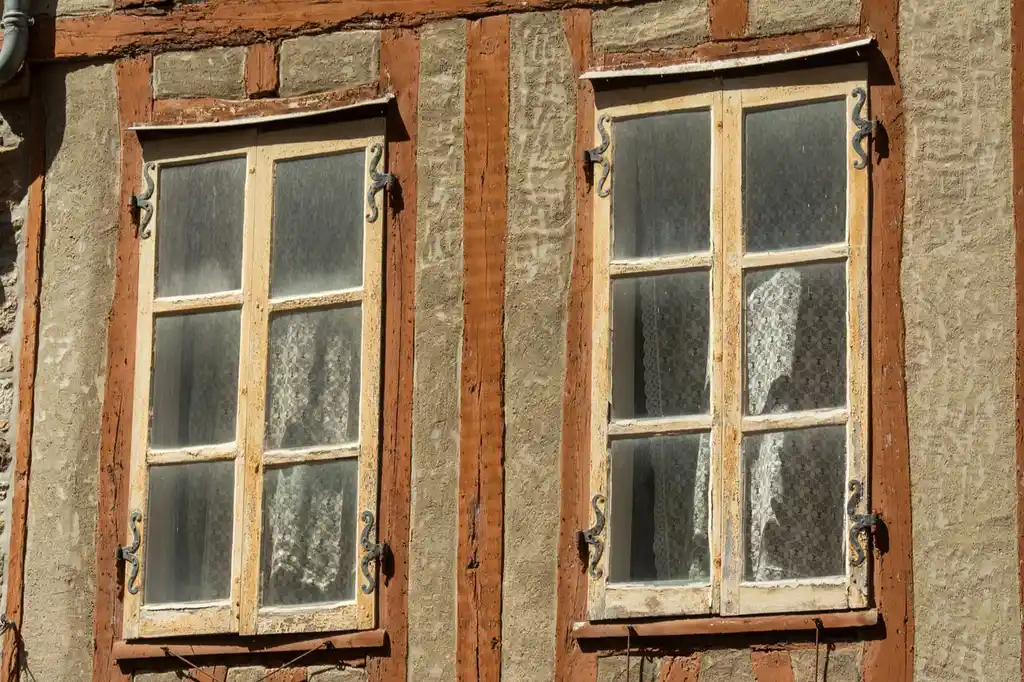
We inspect older trim and layered repairs in the Farmington Historic District with care, while newer vinyl and fiber cement exteriors need their own fastening and flashing details. Elevation matters too: a low eave beside a level walkway is different from a steep roof edge above a sloped yard, where safe access may require scaffolding and a safety harness.
We check how the gutter drains, whether soffit vents remain open, and whether water has reached insulation or framing. Our crew serves Farmington Village, West Farmington, Farmington Woods, and nearby neighborhoods with repairs based on the materials and access at your property.
Farmington Historic District: Older homes can have layered trim and wood details; we check the profile and preserve sound material while tracing moisture beneath the eaves.
Farmington Village: We inspect gutter-to-fascia connections closely where runoff or leaf buildup has left staining along the roof edge.
West Farmington: Wind and exposed roof edges can loosen panels; we check fasteners, adjoining trim, and any opening that could admit rain.
Farmington Woods: Homes with taller elevations need suitable access planning so we can inspect soffit and fascia without compromising safe setup.
Freeze-thaw weather opens joints and stresses gutter fasteners: Water entering a small seam can freeze, expand, and widen the opening. We inspect the joint and backing before selecting a repair, then use materials suited to the temperature and installation conditions.
Autumn leaves and snowmelt overload roof-edge drainage: A backed-up gutter can spill onto fascia and drive water behind trim. We check the gutter connection and surrounding boards to separate drainage problems from material failure.
We walk the exterior and point out visible roof-edge damage.
We protect the area and set up stable access.
We check the repair, clear debris, and review next steps.
From problem to finished result.
IllustrativeThe thermal view is generated from the photograph. It is not a measurement. Drag the handle, or use the arrow keys once it is focused.
Sagging Gutter and Soft Fascia
Before: A homeowner noticed a 10-foot gutter run sagging after rain. The fascia felt soft near two fasteners, and water had marked the siding below. Simply adding longer screws would have left the damaged board in place and risked another pullout.
After: We removed the soft section, checked the backing, and installed replacement fascia across the affected 10-foot run. The gutter was reattached to sound material and aligned for drainage. The visible siding stain was dry at the follow-up check after the next rainfall.
After leaf fall and spring thaw, check for loose gutter joints, standing water, or new staining beneath the eaves. Keep gutters clear so excess weight and overflow do not stress repaired fascia.
Wind-Damaged Soffit Panel
Before: A wind-lifted panel left an opening about 18 inches wide at a home in West Farmington. The loose edge rattled and exposed the underside of the roof overhang to rain and animals.
After: We removed the loose panel, checked adjacent fastening points, and fitted a replacement to match the existing run. The opening was closed, and the nearby vent path remained clear. The repair took about three hours, including setup and cleanup.
Look up at the eaves after strong wind and note any rattling, gaps, or panels sitting out of line. Avoid pushing a loose panel back into place; movement can damage its edge or hidden fasteners.
Recurring Eave Water Stain
Before: A recurring stain appeared beneath an upstairs eave even though the roof surface showed no obvious damage from the yard. Inspection found a failed flashing transition and roughly 4 feet of deteriorated fascia.
After: We opened the affected edge, replaced the damaged fascia, and corrected the transition so water could drain outward. The wall stain did not return during the next two rain events, and the owner could see the repaired seam and replacement section.
Check the eave after heavy rain for fresh marks and inspect the gutter outlet for overflow. If a stain returns, report where it appears and how soon after rainfall; that timing helps trace the water path.
Problems Soffit and Fascia Repair Solves
A damaged eave can turn a small exterior defect into wet framing, attic access for pests, or a gutter that pulls away. For emergency soffit and fascia repair near me Farmington searches, we start by identifying whether the opening is active and what needs immediate attention.
Eave stainingWater staining appears beneath the eaves after rainWater can travel behind fascia into sheathing and insulation, leaving interior marks far from the original opening and weakening roof-edge wood. We trace the stain toward the roof edge, check gutter joints and flashing, and open only the affected area when needed. Once the leak path is identified, we replace unsound material and restore the transition so runoff moves outward. You see the repair location and understand what was causing the stain.
Soft fasciaFascia feels soft where the gutter fasteners attachFasteners in deteriorated wood can loosen, allowing a loaded gutter to sag or pull away and spill water against siding and foundations. We inspect the fascia and backing before reattaching the gutter. Soft sections are removed and replaced with sound material so fasteners have a stable base. We then check alignment and the nearby gutter connection, helping runoff reach the intended drainage route instead of washing down the wall.
Loose soffitA soffit panel has loosened or fallen after windAn open eave can admit wind-driven rain, birds, insects, or small animals and expose the attic edge to drafts. We secure the work area, remove loose pieces, and check adjacent panels and framing for damage. Replacement panels are fitted to the existing profile, with ventilation openings kept clear where present. We also look for the fastener or edge failure that allowed the panel to move.
Peeling trimPaint peels and wood siding rots near the rooflineRepeated wetting can damage trim and move into adjoining siding, increasing the amount of exterior material that needs repair. We check the roof edge, flashing, and siding transition to distinguish surface wear from continuing water infiltration. We repair the failed soffit or fascia connection first, then identify related siding damage. Correcting the source helps protect any new paint or replacement cladding from the same moisture path.
Protect the Roofline and Attic
A properly repaired eave helps keep water and pests outside.
Block Water Entry
Open seams and soft fascia let rain run behind trim and into roof-edge framing. We replace failed sections, restore the flashing transition, and seal exposed joints with exterior-grade caulk. That closes the path water uses to reach sheathing, insulation, and interior ceilings.
Keep Pests Outside
A gap only a few inches wide can provide access for birds, squirrels, and insects. We close openings with correctly fitted soffit panels and secure edges at the fascia, while checking nearby vents remain unobstructed. The result is a tighter roofline without blocking intended airflow.
Stabilize Gutter Edges
Rotten fascia cannot reliably hold gutter fasteners, especially when the gutter carries wet leaves or snowmelt. We inspect the backing before reattaching or replacing affected sections. A solid fastening surface helps keep the gutter aligned and directs runoff away from siding and foundations.
Preserve Exterior Finishes
Repairing roof-edge damage early helps prevent water marks, peeling paint, and siding rot from spreading down the wall. We match material and profile where practical, then check the connection to adjacent trim. A targeted repair can avoid disturbing intact sections of the elevation.
What a written scope covers.
What a written scope covers and what shapes it. Prices are set by the business after the first look.
Typical 2026 pricing in Farmington depends on damaged length, material, access, and whether the backing is rotten. A short fascia section at ground-level access costs less than a two-story eave with concealed water damage. We inspect the roof edge and explain upfront pricing before work begins.
Farmington Siding and Windows Pro provides soffit and fascia fixing in Farmington for loose panels, rot, storm openings, and leaking roof edges. We inspect the surrounding siding and gutter connection, then repair the failed section using compatible materials. Call (860) 744-9803 to describe the damage and arrange an inspection. For active water entry, share where it appears and whether the opening is exposed to rain.
Yes, many repairs are possible in winter when temperatures and site conditions allow safe fastening and sealing. Cold-weather caulk and sealants have manufacturer temperature limits, often near 40 degrees Fahrenheit, so we check product requirements before use. Snow, ice, high wind, or frozen access can make roof-edge work unsafe. We can assess the opening and explain whether a temporary measure or permanent repair is appropriate.
Common causes include leaking gutters, ice buildup, wind-driven rain, failed flashing, and repeated freeze-thaw cycles. Water softens wood behind the fascia, while loose panels can leave an opening for pests. We check the roof edge, gutter slope, and adjoining cladding to find the source rather than replacing only the visible piece. Early repairs help limit damage to sheathing, insulation, and nearby siding.
A loose panel or soft fascia can let the next rain reach the roof edge. Our Connecticut Home Improvement Contractor team will inspect the damage and explain the repair. Call (860) 744-9803 to schedule your Farmington visit.
Call (860) 744-9803 or email [email protected] to describe the siding or window issue at your Farmington home. Our listed office hours are Monday through Friday, 8:00 a.m. to 6:00 p.m.; calls are routed to independent companies. Share the affected area, any visible damage, and whether water is entering so the conversation starts with useful details.